
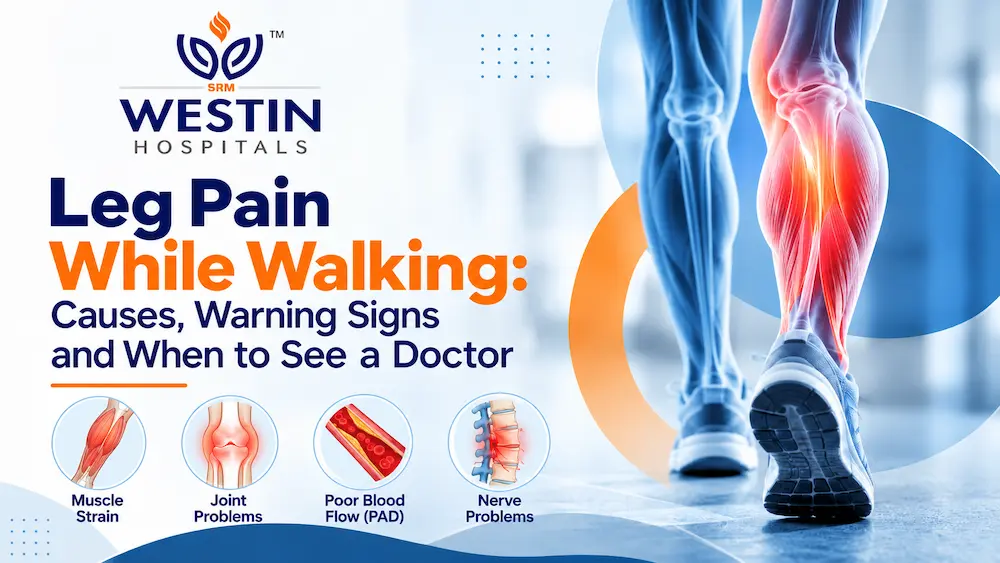
Leg pain while walking is most often caused by muscle strain, joint problems or a pinched nerve. But when cramping pain starts after you walk a certain distance and eases when you stop, it can point to poor blood flow in the leg arteries (peripheral artery disease). Pain with swelling in one leg, sudden severe pain, or pain with a cold, pale leg needs urgent medical care.
Most people have had sore legs after a long day on their feet. But leg pain while walking that keeps coming back, stops you from walking as far as you used to, or affects only one leg is worth understanding. The cause can be something as simple as tired muscles or as serious as narrowing of an artery or a vein problem. This resource helps you understand how to differentiate among these causes, and what to do about them.
The pain can start in muscles, joints, nerves, arteries or veins. The way it feels and what makes it better are the most useful clues.
| Cause | How it usually feels | Useful clue |
|---|---|---|
| Muscle strain or overuse | Sore, tight, aching muscles | Follows unusual activity; improves over a few days |
| Poor arterial blood flow (PAD) | Cramping in calf, thigh or buttock | Starts at a similar walking distance; eases within minutes of rest |
| Vein problems | Heaviness, aching, swelling | Worse at the end of the day or after standing; better with legs raised |
| Blood clot (DVT) | Pain, swelling, warmth in one leg | Can occur at rest; needs urgent assessment |
| Nerve or spine problem | Burning, tingling, shooting pain, weakness | May ease when you sit or lean forward |
| Arthritis or joint wear | Stiff, painful joints | Stiffness after rest, pain on first steps |
| Foot problems | Pain in heel, arch or ball of foot | Linked to footwear, flat feet or long hours standing |
Peripheral artery disease is a disorder in which the arteries that carry blood to the legs become narrowed. As a result, during walking the leg muscles do not receive enough blood and cramp. This is known as claudication.
You are at higher risk if you smoke, have diabetes, high blood pressure or high cholesterol, or are over 50. Because PAD can be mistaken for "just age" or a muscle problem, it is often found late. If this pattern sounds familiar, the vascular team can assess it.
When vein valves do not work well, blood pools in the legs. This can cause a heavy, tired, aching leg that gets worse after standing and improves when you raise your legs. Swelling around the ankles, visible veins and skin changes may follow. You can read about the first signs in our guide to early stage varicose veins symptoms.
A deep vein blood clot (DVT) is different and more urgent. It usually affects one leg, which becomes swollen, warm, red or tender. Do not wait if this happens, especially after long travel, surgery or long bed rest.
A pinched or irritated nerve in the lower back can send pain down the leg. Sciatica often causes a shooting or burning pain from the buttock down the leg, sometimes with tingling or numbness. Narrowing in the spinal canal can cause leg pain and heaviness while walking that eases when you sit down or bend forward. Nerve damage from diabetes can cause burning, numb or tingling feet. If nerve symptoms keep returning or you notice weakness, see our guide on when to see a neurologist.
Overused or tired muscles are the most common cause of sore leg muscles, and aching legs and feet. Walking much further than usual, a new exercise routine, dehydration or standing for hours at work can all be a cause. Arthritis can lead to stiff and painful hips, knees and ankles, and unsuitable shoes, flat feet or inflamed tissue under the heel can cause the foot to be painful with every step.
If the pain is mainly in the knee, including knee and leg pain when walking or sore knees after walking, see our detailed guide on knee pain causes and treatment.
Pain in just one leg can still be a muscle strain, a joint problem or a pinched nerve on that side. But it also reduces blood flow in one leg or a clot. Check for these differences:
Legs that hurt at the end of a long day or sore legs after work may be an indication of tired muscles or vein disorders. Tight legs and stiff knees and thighs after sitting most of the day, however, are generally signs of joint stiffness or limited range of motion. Pain that occurs only when walking and disappears when still suggests poor circulation. Pain that is felt when standing and goes away when sitting might be an indicator for problems with the spine. Keeping a log of when the pain begins and what helps it is a useful way to help the doctor identify the source of the discomfort.
Go to an emergency department without delay if you have:
The doctor will ask where the pain is, how far you can walk before it starts, what relieves it, and about smoking, diabetes, blood pressure and cholesterol. After examining your legs and feeling the pulses in your feet, tests may include:
Not everyone needs every test. The doctor chooses based on your symptoms and examination.
Treatment depends on the cause. Muscle and joint pain often settles with rest, physiotherapy and medicines your doctor advises. Circulation problems are managed by controlling the risk factors (stopping smoking, controlling diabetes, blood pressure and cholesterol), a structured walking plan, and medicines. When the blockage is significant, procedures such as angioplasty or bypass may be considered. Vein problems can be managed with compression, lifestyle changes and, where needed, minimally invasive vein treatments. Nerve and spine problems may need physiotherapy, medicines or further evaluation.
If your leg pain happens every time you walk, affects one leg, or comes with swelling, skin changes or slow-healing sores, a circulation check is worth doing. The Vascular Surgery team at Westin Hospitals, Madhapur, Hyderabad manages arterial and venous conditions, including peripheral artery disease, varicose veins and deep vein thrombosis. For joint and bone causes, see Orthopedics and Physiotherapy. If you have diabetes, our guide on prediabetes and HbA1c explains why blood sugar control also protects your legs.
Leg pain while walking can come from tired or strained muscles, joint problems such as arthritis, nerve irritation from the spine, poor blood flow in the leg arteries (peripheral artery disease), or vein problems. Where the pain sits and what eases it helps point to the cause.
Long walks can strain muscles, tendons and joints, especially if you are not used to the activity or your footwear is poor. If the pain comes on after a similar distance every time and settles when you stop, circulation or the spine may be involved and it should be checked.
Pain in one leg can come from a muscle or joint problem, a pinched nerve, or reduced blood flow in that leg. A swollen, warm, tender leg on one side needs urgent assessment because a blood clot is possible.
Slow down or rest until the pain settles, wear supportive footwear, warm up and stretch, and stay hydrated. If the pain returns at the same distance each time or does not improve, see a doctor instead of pushing through it.
It is usually a cramping or tight ache in the calf, thigh or buttock that begins after walking a certain distance and eases within a few minutes of rest. Cold feet, slow-healing sores and weak pulses in the foot may also be present.
It can be, but a clot more often shows as swelling, warmth, redness and tenderness in one leg, sometimes while resting. Chest pain or breathlessness with leg swelling is an emergency.
Common reasons include unsuitable shoes, plantar fascia strain, flat feet, nerve problems from diabetes, arthritis, or circulation problems. Foot pain with numbness, colour change or a sore that will not heal should be checked.
See a doctor if the pain keeps coming back, limits how far you can walk, is worse in one leg, or comes with swelling, numbness, skin changes or sores. Sudden severe pain with a cold, pale leg needs emergency care.
If leg pain keeps returning, limits how far you can walk, or comes with swelling or slow-healing sores, consult the vascular team at Westin Hospitals, Madhapur, Hyderabad.
For routine concerns, Book an Appointment. If you have sudden severe leg pain, a cold pale leg, or leg swelling with chest pain or breathlessness, use Emergency Care instead of waiting, or Contact Us for assistance.