
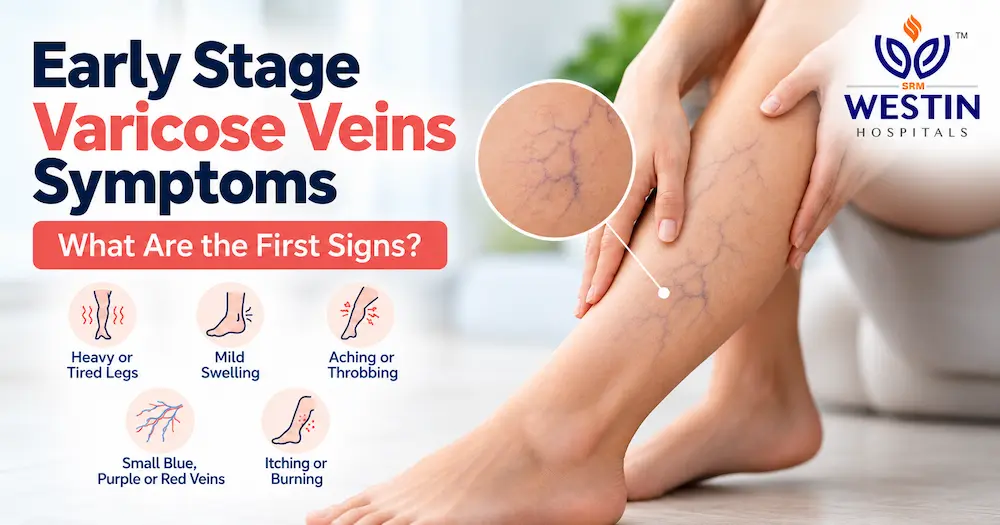
Early stage varicose veins symptoms can be easy to miss because large, twisted veins may not be visible at first. Some people first notice heavy or tired legs, mild ankle swelling, aching, itching, or small blue and purple veins under the skin.
These changes do not always mean you have varicose veins. However, if they keep returning, especially after long hours of sitting or standing, they may be worth checking.
The beginning stage of varicose veins may cause leg heaviness, aching, tiredness, mild ankle swelling, itching, burning, or small visible veins.
Symptoms may become more noticeable later in the day or after standing for a long time. Spider veins may also appear early, but they are smaller blood vessels and are not the same as larger varicose veins.
Veins in the legs carry blood back toward the heart. Small valves inside the veins help keep blood moving in the correct direction.
If these valves become weak or do not close properly, some blood may collect inside the vein. Over time, pressure can increase and the vein may become wider or more visible.
During the early stage of varicose veins, there may be very little to see. A person may notice discomfort before obvious bulging veins appear.
Leg heaviness is one of the common early complaints.
Your legs may feel normal in the morning but become tired, heavy, or uncomfortable by evening. This can be more noticeable if your work involves sitting or standing for many hours.
The feeling may improve after resting or raising your legs.
Having heavy legs alone does not confirm varicose veins, but repeated heaviness together with swelling or visible veins deserves attention.
Some people experience a dull ache, pressure, or throbbing in the calves or lower legs.
The discomfort may become stronger after standing for a long time and improve when you rest.
Night-time cramps can also occur, although leg cramps have many possible causes. If aching or cramps regularly happen together with swelling, heaviness, or visible veins, mention the complete pattern to your doctor.
One of the first visible changes may be small veins close to the skin.
They can look:
These are commonly called spider veins.
People searching for the early stages of spider veins often notice these marks before larger veins become visible.
Spider veins may occur on their own and do not always develop into large varicose veins.
The ankles or lower legs may become slightly swollen, especially toward the end of the day.
You may notice that shoes feel tighter or that sock marks stay visible on the skin.
Swelling has many possible causes, so it should not automatically be blamed on varicose veins. Persistent or unexplained swelling should be medically evaluated.
Some people notice itching, warmth, or a mild burning feeling around areas where veins are becoming more visible.
The skin may still look normal at this stage.
If itching occurs along with swelling, aching, heaviness, or new visible veins, it can be useful information during a medical assessment.
Spider veins and varicose veins are different.
Spider veins are small blood vessels near the surface of the skin. They usually appear as thin red, blue, or purple lines.
Varicose veins are larger veins that may become widened, raised, twisted, or rope-like.
Seeing a few spider veins does not mean that large varicose veins will definitely develop.
This distinction is useful for people searching for first stage early stage varicose veins symptoms, because small visible vessels may be an early concern, but the doctor also considers symptoms such as swelling, aching, heaviness, and skin changes.
Varicose veins can affect anyone, but some factors may increase the chance of developing them.
These include:
People whose jobs require them to remain on their feet for many hours may notice leg symptoms more clearly at the end of the day.
Having one or more risk factors does not mean you will definitely develop varicose veins.
No.
Some people notice visible veins without pain.
Others may experience heaviness, itching, swelling, or tired legs even when the veins do not look very large.
The appearance of the veins alone does not show how serious the problem is. A doctor will also consider how long symptoms have been present and whether they affect walking, work, sleep, or other daily activities.
A doctor usually begins by examining your legs and asking about your symptoms.
You may be asked:
If more information is needed, a duplex ultrasound may be advised.
This test helps doctors look at the structure of the veins and see how blood is flowing through them.
Not everyone with small visible veins needs the same tests. The decision depends on the symptoms and examination.
Simple lifestyle measures may help reduce symptoms and support blood circulation.
Regular walking keeps the calf muscles active and helps blood move through the legs.
It may also help to avoid staying in exactly the same sitting or standing position for very long periods. Raising the legs while resting and maintaining a healthy weight may reduce pressure on the veins for some people.
Compression stockings may help selected patients, but the correct type should be recommended by a healthcare professional. They may not be suitable for every circulation problem.
Consider seeing a doctor if:
Sudden swelling in only one leg, especially with pain, warmth, or redness, needs prompt medical attention because it may have a cause other than ordinary varicose veins.
Seek emergency care if leg symptoms occur with sudden chest pain, breathing difficulty, fainting, or other severe symptoms. Learn about emergency services at Westin Hospitals.
Varicose veins are not only about appearance. Persistent leg heaviness, swelling, aching, or visible vein changes may sometimes need an assessment of the circulation in the legs.
Patients with vein-related concerns can consult the Vascular Surgery Department at Westin Hospitals in Madhapur, Hyderabad.
A vascular assessment can help determine whether the changes are mild and can be monitored or whether further testing is needed.
Concerned about recurring leg symptoms? For an assessment, book an appointment or contact Westin Hospitals.
Common early signs include heavy or tired legs, aching, mild ankle swelling, itching, burning, and small visible veins. Symptoms may become more noticeable after standing for long periods.
The beginning stage may show small blue, red, or purple veins instead of large bulging veins. Some people notice leg heaviness or swelling before visible changes become obvious.
Not always. Spider veins are smaller surface blood vessels and may occur without larger varicose veins. They can sometimes appear along with other symptoms of poor venous circulation.
Yes. Some people have visible veins without pain. Others mainly experience heaviness, swelling, itching, or tired legs.
A duplex ultrasound may be used when a doctor needs to examine the leg veins and assess the direction of blood flow.
A vascular surgeon or another trained vascular specialist can evaluate vein problems and advise whether monitoring, further testing, or treatment is needed. Vascular Surgery at Westin Hospitals