
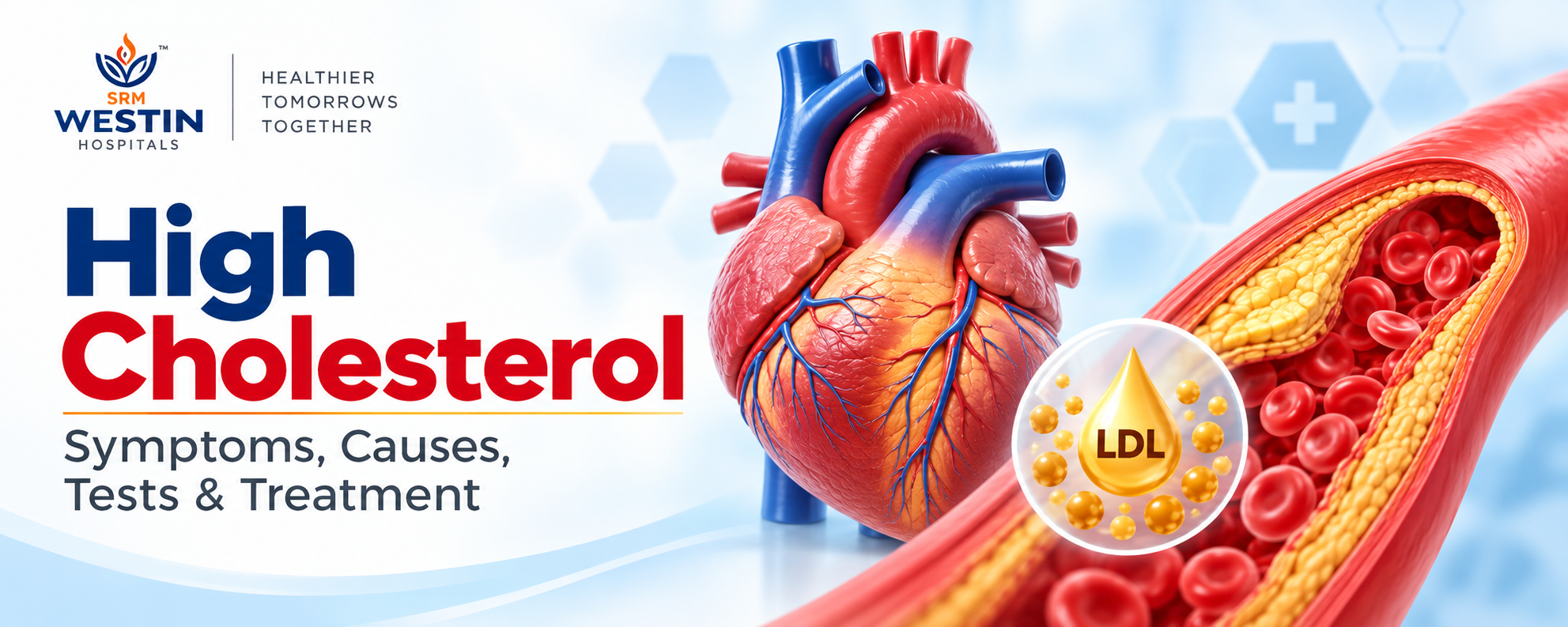
High cholesterol is a common health condition in which certain fats in the blood reach unhealthy levels. The important thing to know is that high cholesterol usually does not cause noticeable symptoms. Most people learn about their condition during a routine cholesterol or lipid profile blood test.
Although cholesterol is necessary for normal body functions, too much LDL cholesterol can gradually contribute to fatty deposits inside the arteries. Over time, these deposits may narrow blood vessels and increase the risk of heart disease, heart attack and stroke. Patients with cardiovascular risk factors can consult the Cardiology Department at Westin Hospitals for evaluation.
High cholesterol means there is an unhealthy amount of cholesterol or other fats circulating in your blood.
Cholesterol travels through the bloodstream in particles called lipoproteins. The commonly discussed types are:
Your doctor usually considers all these values together rather than looking at only one number.
In most people, there are no early high cholesterol symptoms.
It can be hard to tell if your cholesterol is high based on how you feel. A person may appear to be in good health, stay physically active, but still have abnormal levels of cholesterol in the body.
This is why testing on a regular basis becomes critical for those who have diabetes, high blood pressure, obesity, a family history of high cholesterol or those who have had heart disease. People with abnormal blood sugar can also read our guide on Prediabetes: Early Signs, HbA1c Levels & Prevention.
Chest pain, shortness of breath or stroke-like symptoms aren't “cholesterol symptoms”; they are signs of complications that could arise from narrowed or blocked blood vessels and should be taken seriously by seeking medical help.
High cholesterol can develop due to a combination of lifestyle, medical and genetic factors.
Regular consumption of foods high in saturated or trans fats may raise LDL cholesterol.
Low activity levels can contribute to weight gain and may negatively affect cholesterol levels. For support with activity and long-term wellness, patients can explore Fitness and Wellness services.
Being overweight or obese is associated with metabolic changes that can raise unhealthy cholesterol and triglyceride levels.
Smoking can negatively affect cardiovascular health and may lower protective HDL cholesterol.
Certain health conditions can influence cholesterol levels, including diabetes, hypothyroidism, chronic kidney disease and some liver conditions. If thyroid problems are suspected, read our guide on Thyroid Problems: Which Doctor Should You Consult?. You can also learn more about Fatty Liver Disease.
Some people inherit genetic changes that cause very high LDL cholesterol, even when they maintain a healthy lifestyle.
Your risk may be higher if you:
Age can also influence cholesterol levels, although high cholesterol can occur in younger people too.
The main test is a lipid profile, also called a lipid panel.
A lipid profile commonly measures:
Westin Hospitals includes lipid profile testing covering Total Cholesterol, HDL, LDL, VLDL and triglycerides within its Health Checkup services.
Your doctor may also review your blood pressure, blood sugar, weight, family history and other medical conditions before deciding what your cholesterol results mean for you. For an initial assessment, you can consult the General Medicine Department.
There is no single cholesterol target that is right for every person.
Doctors interpret LDL, HDL, triglycerides and total cholesterol together with your overall cardiovascular risk.
For example, a person who has existing heart disease or diabetes should have a lower target LDL than a person who does not have these risk factors.
For this reason, avoid changing medicines or starting cholesterol treatment based only on a laboratory number without medical advice.
Treatment usually starts with improving everyday habits.
Include more:
Try to reduce foods that are high in saturated fats, trans fats, excess sugar and heavily processed ingredients. Dietary changes are an important part of lowering cardiovascular risk. Patients who need personalised food guidance can consult Dietetics at Westin Hospitals.
Regular physical activity can support healthy weight, cardiovascular fitness and cholesterol control.
A practical approach is to start gradually and build an exercise routine that you can maintain long term.
Even moderate weight reduction can improve several cardiovascular risk factors in people who are overweight.
Quitting smoking benefits the heart and blood vessels and reduces overall cardiovascular risk.
Keeping diabetes, high blood pressure and thyroid disorders appropriately managed can also be important when controlling cholesterol. The Endocrinology Department can support evaluation of diabetes, thyroid and other metabolic conditions when specialist care is needed.
No.
Some people can manage cholesterol with lifestyle changes and regular monitoring, while others may need medication.
Doctors decide based on factors such as:
Several types of cholesterol-lowering medicines are available. Statins are commonly used, while other medicines may be considered in selected patients depending on their cholesterol pattern and medical history.
Do not start, stop or change cholesterol medication without discussing it with your doctor.
When excessive cholesterol contributes to plaque formation, arteries may gradually become narrower. This process is known as atherosclerosis.
Reduced blood flow can contribute to conditions such as:
Because these changes may develop over many years without obvious warning signs, identifying and managing cholesterol early is important. People with heart-related risk factors can consult Cardiology at Westin Hospitals for cardiovascular assessment.
Consider medical evaluation if:
If you develop sudden chest pain, severe breathing difficulty, weakness on one side of the body, facial drooping or difficulty speaking, seek emergency medical care immediately. Westin Hospitals provides Emergency Services & Trauma Care.
At Westin Hospitals, Madhapur, patients can consult the General Medicine or Cardiology team for cholesterol evaluation, cardiovascular risk assessment and appropriate treatment planning.
High cholesterol usually has no early symptoms. A lipid profile blood test is the reliable way to detect abnormal cholesterol levels.
Yes. Body weight is only one risk factor. Genetics, diet, physical activity, diabetes, thyroid problems and other medical conditions can also affect cholesterol.
A lipid profile test commonly measures total cholesterol, LDL, HDL and triglycerides.
Both provide useful information. High LDL is associated with plaque buildup, while HDL helps transport excess cholesterol back toward the liver. Your doctor interprets them together with your other risk factors.
Some people can improve their cholesterol through diet, physical activity, weight management and other lifestyle changes. Others require medication because of their cholesterol levels or overall cardiovascular risk.
You can begin with a general physician. People with significant cardiovascular risk, heart symptoms or existing heart disease may also be evaluated by a cardiologist.
High cholesterol can remain unnoticed for years, but a simple blood test can reveal whether your levels need attention. Regular screening, healthy food choices, physical activity, weight management and appropriate medical treatment can help reduce long-term cardiovascular risk.
If your cholesterol results are abnormal or you have multiple heart-risk factors, consult the General Medicine or Cardiology team at Westin Hospitals, Madhapur for further evaluation and a personalised management plan.
Book an Appointment or Contact Westin Hospitals for assistance.