
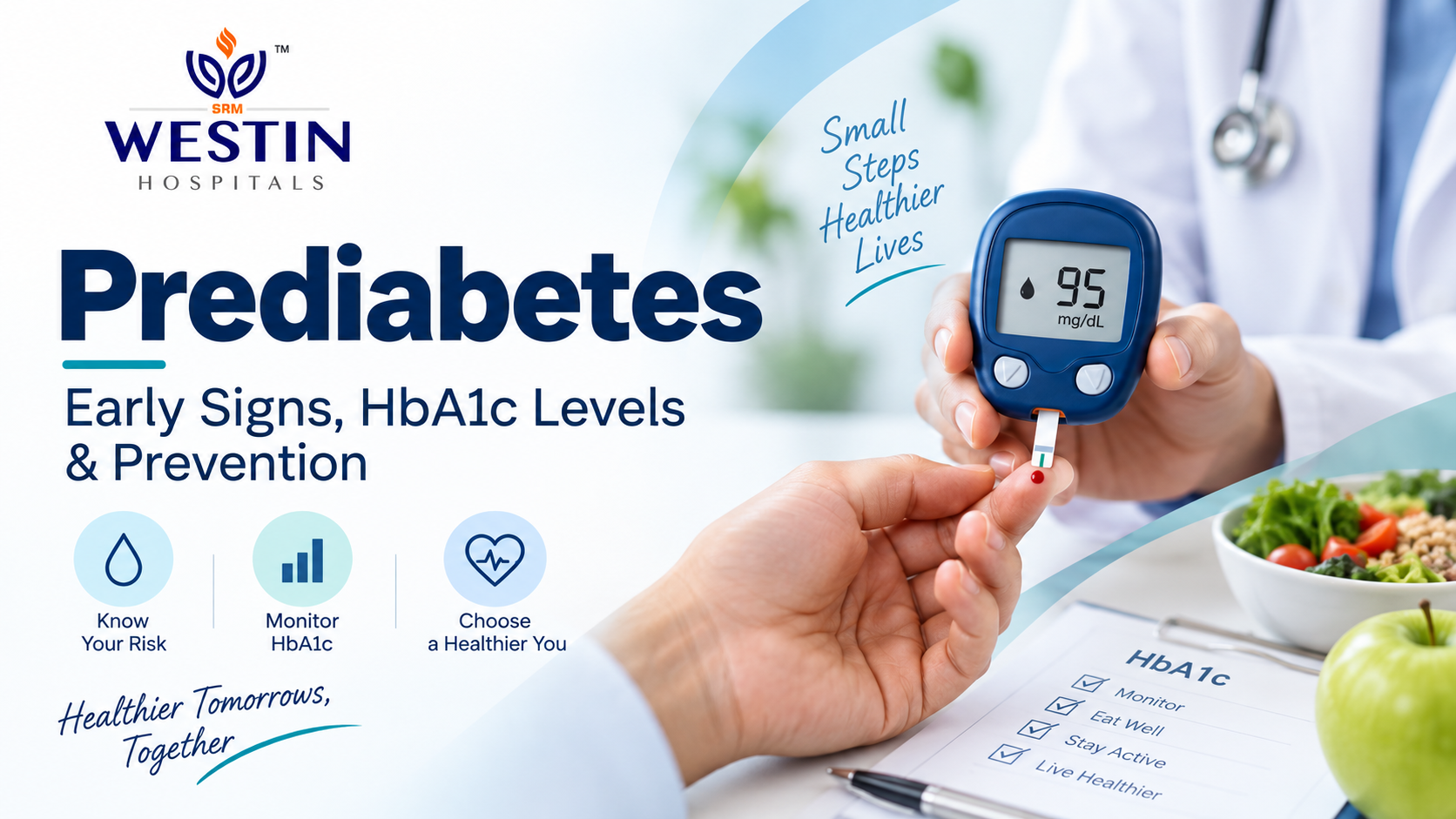
Published: 15 September 2026
Quick Answer: Prediabetes means your blood sugar is higher than normal but has not yet reached the diabetes range. In many people, it causes no obvious symptoms. Blood sugar testing is especially important if you have risk factors such as excess weight, family history of diabetes, PCOS, high blood pressure or low physical activity.
Early detection of prediabetes is essential in preventing type 2 diabetes because a patient can make specific lifestyle changes to reduce the risk.
At Westin Hospitals, Madhapur, patients with high blood sugar or suspected prediabetes can consult the Endocrinology Department or General Medicine Department for evaluation.
Prediabetes occurs when the body begins to have trouble regulating blood glucose.
One of the reasons for prediabetes is insulin resistance.
Insulin resistance is when the body's cells do not respond to insulin, which causes high levels of glucose to stay in the bloodstream.
Having prediabetes does not necessarily indicate that a person will develop diabetes, but it does increase the risk of developing it.
This is the most important point.
Many people with prediabetes feel completely normal and discover it only during a routine blood test. Regular screening is therefore more reliable than waiting for symptoms.
If blood sugar levels rise further, some people may notice symptoms associated with high blood glucose.
Needing to drink water more often or urinating more frequently can occur when blood glucose becomes elevated.
If these symptoms continue, a blood sugar test may be appropriate.
Feeling unusually tired even after adequate sleep can have many causes.
Blood sugar problems are one possible reason, particularly when fatigue occurs together with thirst, frequent urination, weight changes or other risk factors.
Changes in blood glucose can temporarily affect the way the eyes focus.
Recurring blurred vision should not automatically be assumed to be caused by prediabetes, but it deserves medical evaluation if it persists.
Dark, thick or velvety skin around the neck, armpits or other body folds can be a sign of insulin resistance.
This condition is called acanthosis nigricans and may occur in people with prediabetes or type 2 diabetes.
Some people may feel hungry again soon after eating.
However, hunger alone is not enough to diagnose prediabetes and should be considered together with other symptoms and risk factors.
Your risk may be higher if you have:
Prediabetes is often linked to metabolic risk factors such as obesity, high triglycerides, low levels of HDL cholesterol and high blood pressure.
Women with PCOS can also read our guide on PCOS: Symptoms, Causes & Treatment.
The HbA1c test estimates your average blood glucose over roughly the previous two to three months.
Commonly used ranges are:
| Test | Prediabetes Range |
|---|---|
| HbA1c | 5.7%–6.4% |
| Fasting blood glucose | 100–125 mg/dL |
| 2-hour OGTT | 140–199 mg/dL |
These tests should be interpreted by a doctor in the context of your overall health and medical history.
HbA1c provides an estimate of average blood glucose over the previous few months.
This test measures blood glucose after fasting, usually overnight.
This test measures how the body handles glucose over a set period after drinking a glucose solution.
Your doctor will decide which test is most appropriate.
Westin Hospitals' Health Packages include fasting and post-lunch blood sugar testing along with physician consultation as part of the Master Health Checkup.
Prediabetes can often improve significantly with early and consistent lifestyle changes.
Helpful steps may include:
Choose more vegetables, whole grains, pulses, lean protein and high-fibre foods while reducing excess refined carbohydrates, sugary drinks and highly processed foods.
Patients who need personalised dietary guidance can consult Dietetics at Westin Hospitals.
Regular exercise can improve insulin sensitivity and help the body use glucose more effectively.
For people who are overweight, even modest weight reduction can meaningfully reduce the risk of progressing to type 2 diabetes.
Poor sleep and long-term stress can make healthy blood sugar management more difficult.
Repeat blood tests may be recommended to monitor whether blood sugar is improving, remaining stable or moving toward diabetes.
No.
Many people are able to control prediabetes with exercise and diet changes.
For some patients with a high risk of progressing to diabetes, diabetes drugs may be an option.
The choice of medicine is based on your lab results, weight, age, medical history and other factors.
Don't start taking diabetes medications on your own.
Consider medical evaluation if:
People with prediabetes should also have cardiovascular risk factors such as blood pressure and cholesterol reviewed.
Yes. Prediabetes often causes no noticeable symptoms, which is why blood testing is important for people with risk factors.
An HbA1c level between 5.7% and 6.4% is commonly classified as prediabetes.
No. Prediabetes increases the risk of type 2 diabetes, but progression is not inevitable. Early lifestyle changes and regular monitoring can reduce the risk.
Dark, velvety skin around the neck or armpits may indicate insulin resistance, which is associated with prediabetes.
A general physician can perform the initial evaluation and blood tests. An endocrinologist may be appropriate when blood glucose remains abnormal, multiple metabolic risk factors are present or specialist diabetes care is needed.
The frequency depends on your test results and overall risk. Your doctor may recommend regular blood sugar or HbA1c monitoring based on your individual condition.
Prediabetes is easier to manage when it is identified early.
If you have an abnormal blood sugar result, family history of diabetes, PCOS, unexplained weight changes or other risk factors, you can consult Westin Hospitals, Madhapur for evaluation.
Westin Hospitals provides Endocrinology, General Medicine, Dietetics and Health Checkup services to support blood sugar assessment and long-term metabolic health.
Book an Appointment or Contact Westin Hospitals for assistance.