
Published: 12 October 2026 · Last updated: 12 October 2026
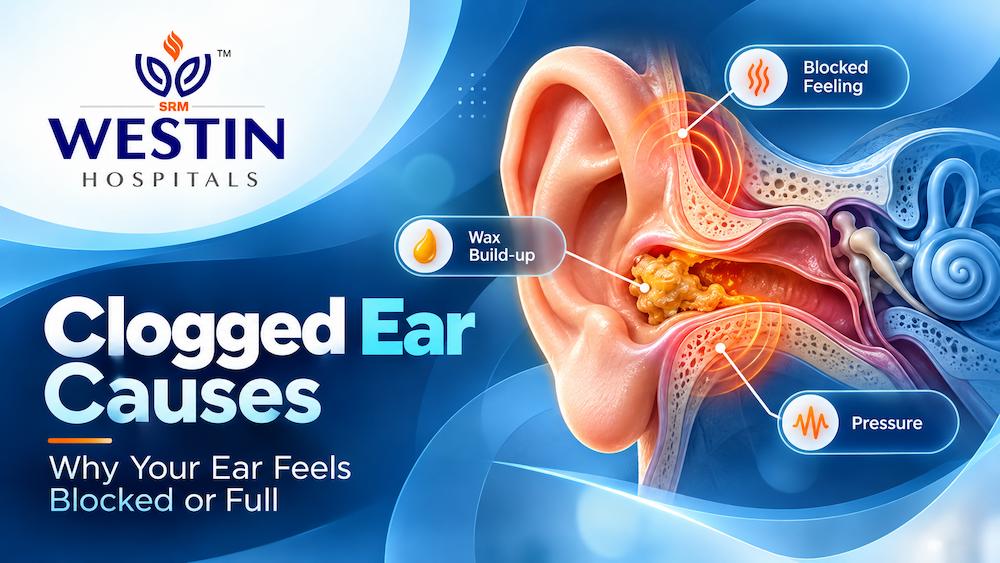
A clogged ear can make hearing feel dull or create pressure inside the ear. Some people describe it as an underwater feeling, while others notice popping, ringing or fullness in one ear.
There are several blocked ear causes. Earwax, colds, sinus congestion, allergies, ear infections, trapped water and changes in air pressure are common reasons. Most mild cases improve when the underlying cause settles. If the blockage continues or affects hearing, it is better to have the ear checked.
A blocked ear can happen when something blocks the ear canal or when pressure behind the eardrum does not balance properly. Earwax, a cold, sinus problems, allergies, infection, trapped water and air-pressure changes are among the common causes.
If you have a persistent feeling of fullness or pressure, changes in your hearing, fluid or pus draining from your ear, and intense pain or vertigo, you should seek medical attention.
A blocked ear may feel full, heavy, plugged or difficult to pop. Hearing can become muffled, and some people notice clicking, crackling or mild ringing.
The feeling alone does not tell you the exact cause. Earwax, infection and pressure problems can produce similar symptoms.
Earwax normally protects the ear canal, but sometimes too much wax collects and blocks it. This can make sounds seem quieter and may also cause fullness, itching, ringing or mild discomfort.
Using cotton buds deep inside the ear can make the problem worse because they may push the wax farther inside instead of removing it.
The ear is connected to the back of the nose through the Eustachian tube. A cold, sinus congestion or allergy can cause swelling around this tube.
When the tube does not open normally, pressure may build behind the eardrum. The ear can then feel full, blocked or difficult to pop, and hearing may temporarily seem muffled.
In many cases, the ear pressure improves when the cold or nasal congestion settles. If it continues after you otherwise feel better, an ENT evaluation may help find the cause.
The Eustachian tube helps balance pressure inside the middle ear. It normally opens when you swallow, chew or yawn.
If it remains partly closed, you may feel pressure, popping or fullness even when there is no earwax. This condition is called Eustachian tube dysfunction and can happen after a cold or during allergy and sinus problems.
An ear infection may cause swelling or fluid around the middle ear. Along with a blocked sensation, a person may have ear pain, fever, reduced hearing or discharge.
Because infection and wax can both make an ear feel blocked, it is better not to assume the cause without looking inside the ear.
Water may remain in the ear canal after swimming, bathing or showering. This often creates a temporary plugged feeling.
The water usually drains naturally, but if the ear becomes painful, itchy or starts producing discharge, medical evaluation may be needed.
Ear blockage commonly happens during take-off and landing on a flight. The pressure outside the ear changes quickly, while the middle ear may take a little longer to adjust.
Swallowing, yawning or chewing may help the Eustachian tube open. People who already have a cold or heavy nasal congestion may notice stronger pressure during a flight.
The jaw joint is close to the ear. Problems in this joint can sometimes cause pressure or discomfort around the ear.
Jaw-related symptoms may also include clicking while chewing, pain when opening the mouth or tenderness around the jaw. If the main complaint is ear blockage, the ear should still be examined before assuming the jaw is responsible.
Sometimes only one ear is affected; earwax might build up on one side, water might pool in one canal, or there might be an infection or pressure issue affecting one ear more severely than the other.
If one ear stays blocked for several days, or if the blockage is accompanied by hearing loss, ringing, discharge or dizziness, it is better to get it checked.
Yes. Ear blockage does not always cause pain.
Earwax buildup, mild pressure changes and Eustachian tube dysfunction can cause fullness or muffled hearing without earache. Even without pain, persistent blockage should be checked when hearing is affected.
An ENT consultation may be useful when:
Seek prompt medical attention if you develop:
A sudden hearing change should not automatically be treated as simple earwax.
An ENT doctor usually starts by examining the ear canal and eardrum. This helps identify earwax, swelling, infection, fluid or changes in the eardrum.
If the problem appears to be linked to congestion or sinus symptoms, the nose and throat may also be checked. Hearing or balance tests may be advised when needed.
Not everyone needs the same tests. The examination depends on the symptoms and what the doctor finds.
If ear blockage continues or starts affecting your hearing, an ENT examination can help identify the cause.
The ENT Department at Westin Hospitals provides care for conditions involving the ear, nose, sinuses and throat.
The department also manages hearing problems, balance disorders, vertigo, sinus conditions and ear-related surgical concerns. Westin Hospitals also provides Audiology and Speech Therapy services.
The ENT department has diagnostic equipment including endoscopes, video camera systems and fine binocular microscopes.
Yes. A large buildup of earwax can partly or completely block the ear canal, which can make sounds seem quieter.
Yes. Swelling in the nose and sinuses can affect the Eustachian tube and create pressure or fullness inside the ear.
Changes in air pressure during take-off and landing can temporarily affect pressure inside the middle ear.
No. Infection, sinus congestion, allergies, trapped water and pressure changes can also make the ear feel blocked.
It is better not to push cotton buds deep into the ear. They may push wax farther inside and can injure the ear canal or eardrum.
An ENT specialist can evaluate persistent ear blockage, hearing changes, ear infections and pressure-related problems.